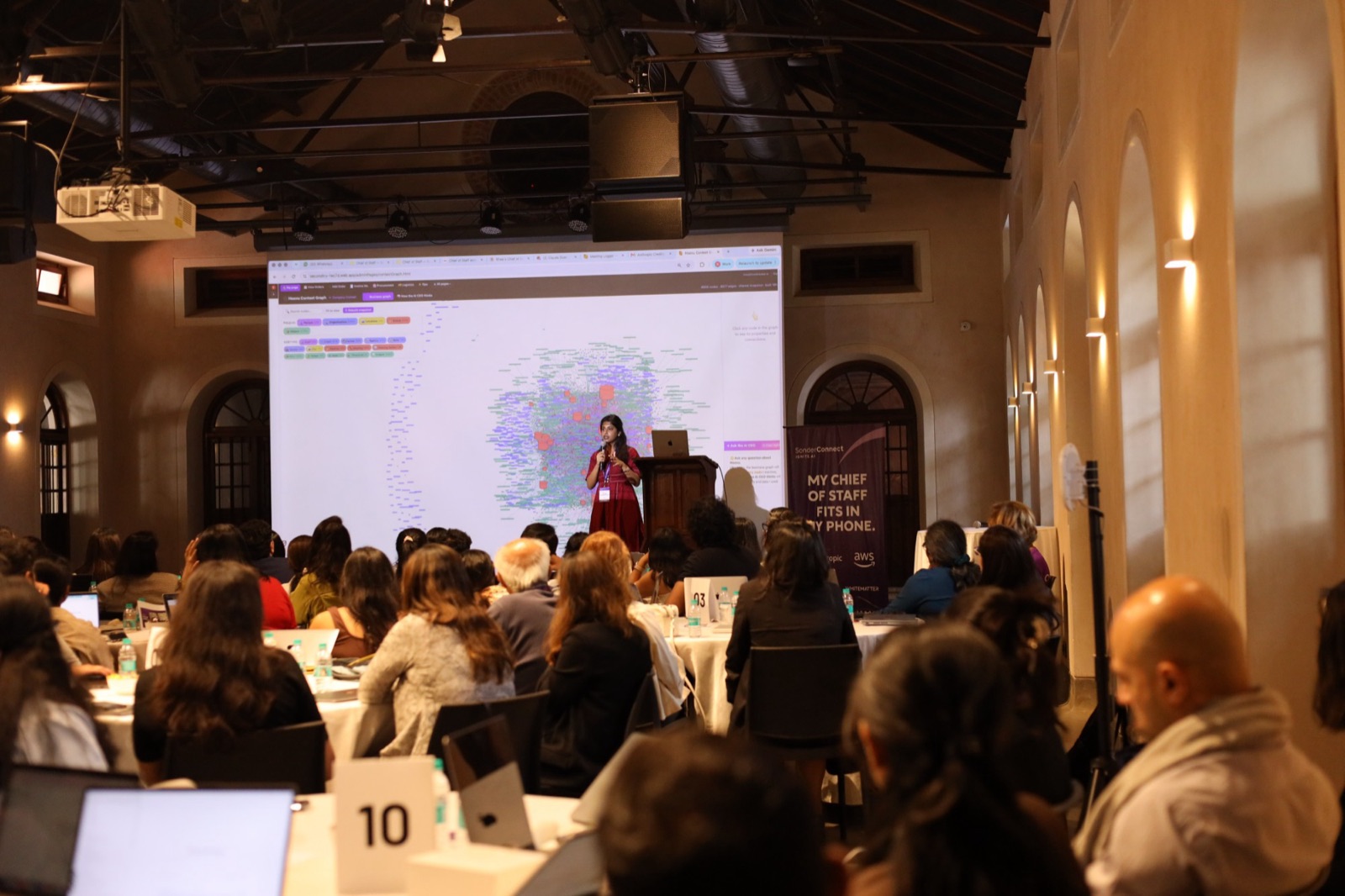
On 19 November, SonderConnect ran Ignite.AI at The Sabha in Bengaluru: a full day for founders, operators and tech teams, with Anthropic and WhiteMatter as partners and AWS as title sponsor.
There were two tracks. Tech teams spent the day in the Tech Hall, shipping agents on Amazon Bedrock AgentCore with AWS solutions architects and learning evals from Anthropic. Founders and operators had the Main Hall. My slot was the Main Hall after lunch: two hours called Build your Chief of Staff agent.
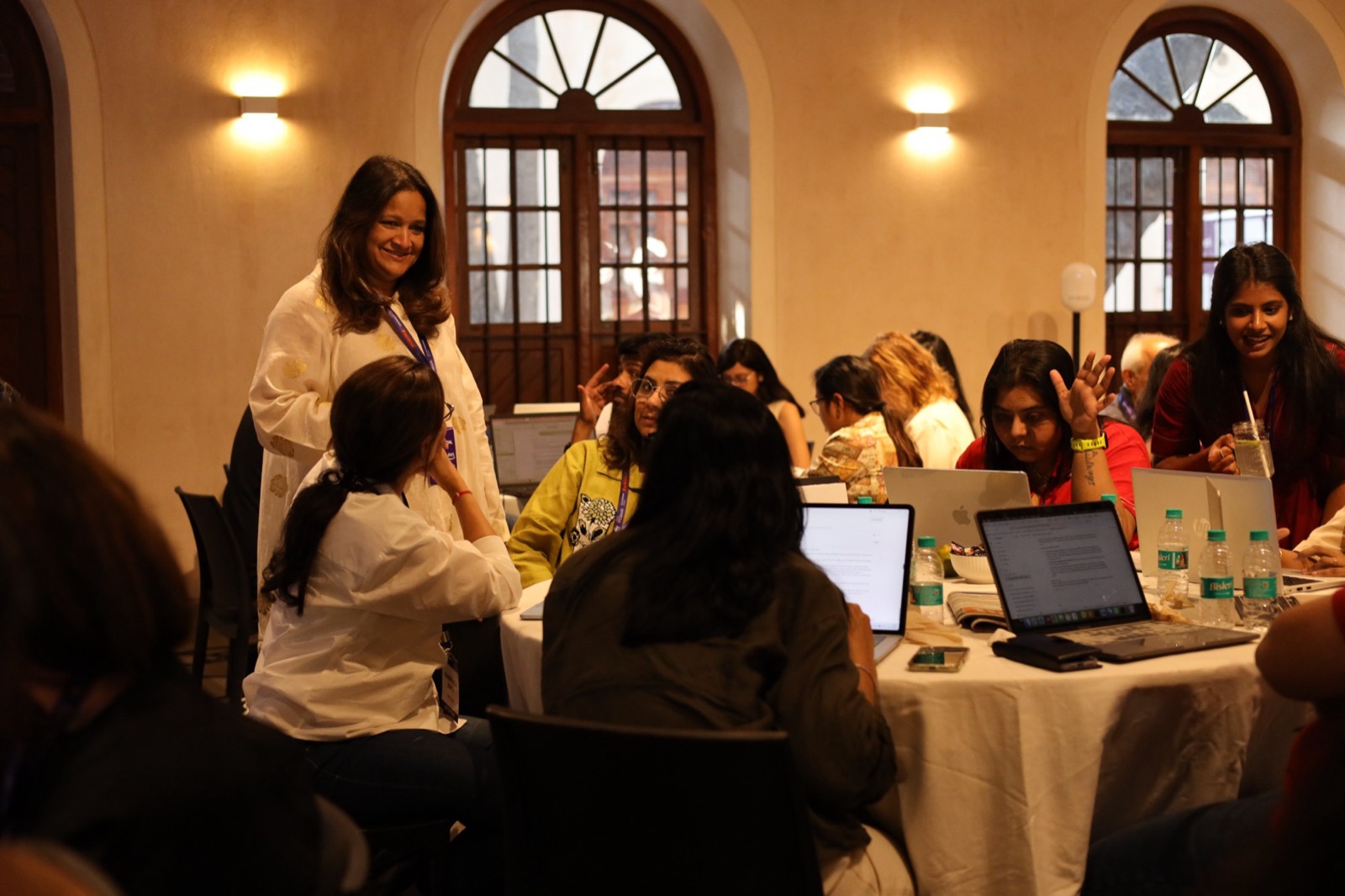
It was the largest workshop I’ve run for Rhai. The round tables were full, laptops were open, and many people were building an agent for the first time.
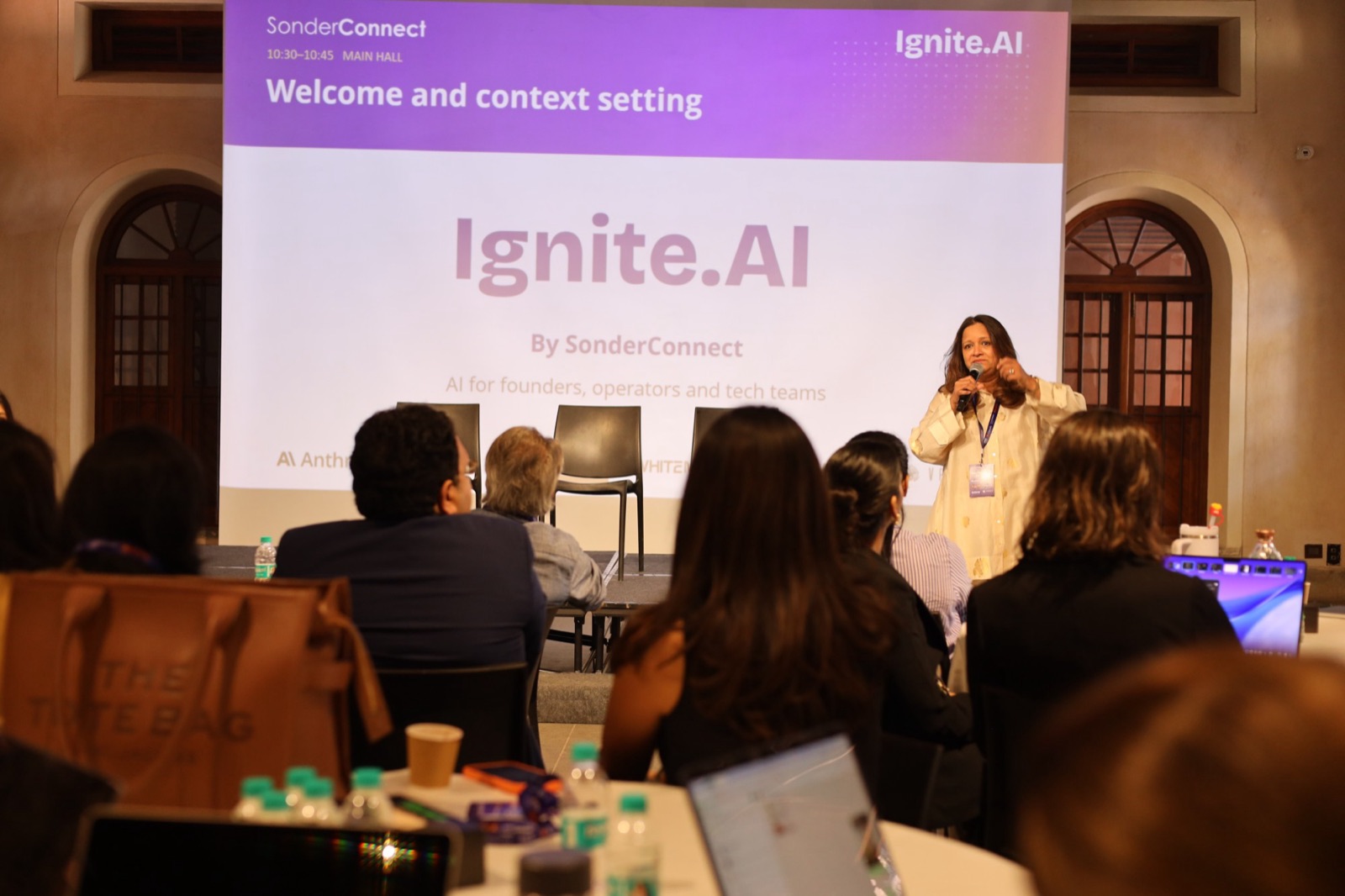
Leave with an agent, not a plan to try one.
People leave most AI talks with a few screenshots and a vague plan to “try it.” I wanted everyone to leave this one with a working agent built around their own week. The session had four parts:
What an LLM is, what an agent is, and what a chief of staff actually does.
Live demos of the agents I use every day.
Everyone builds their own, one guided question at a time.
What this means for roles, and for companies.
Seven words, one sentence each.
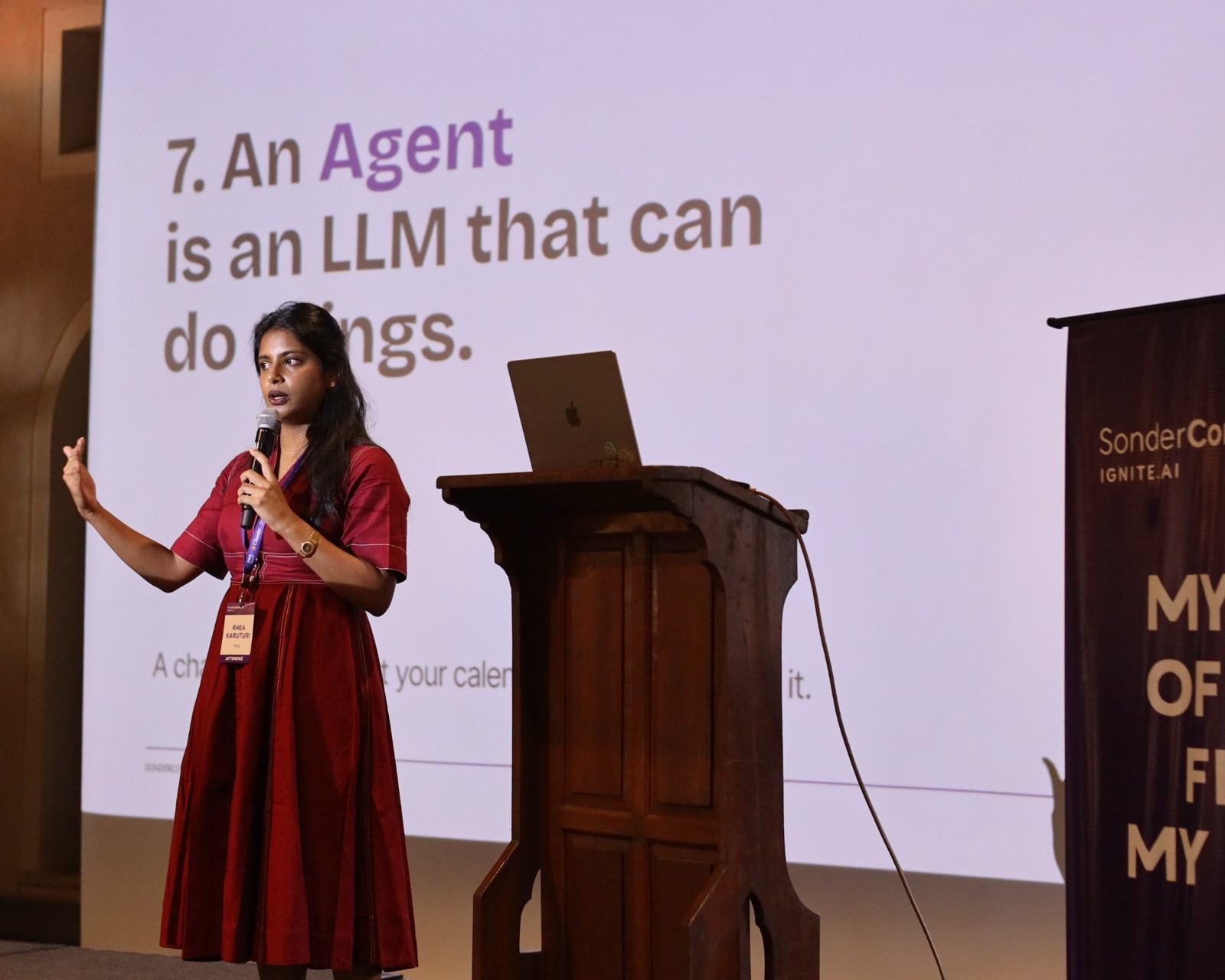
Before anyone built anything, we went through seven terms. The last one mattered most.
Predicts the next word. That is the whole trick.
It works because it is specific, not because of magic words.
Everything the model can see at once. If it isn’t in there, the model doesn’t know it.
A plug into your tools, like the logins you hand a new hire. Start read-only.
A saved how-to it loads when the task matches. The SOP in the binder.
A workspace with its own instructions and files. Where your chief of staff lives.
An LLM that can do things. A chatbot talks about your calendar. An agent opens it.
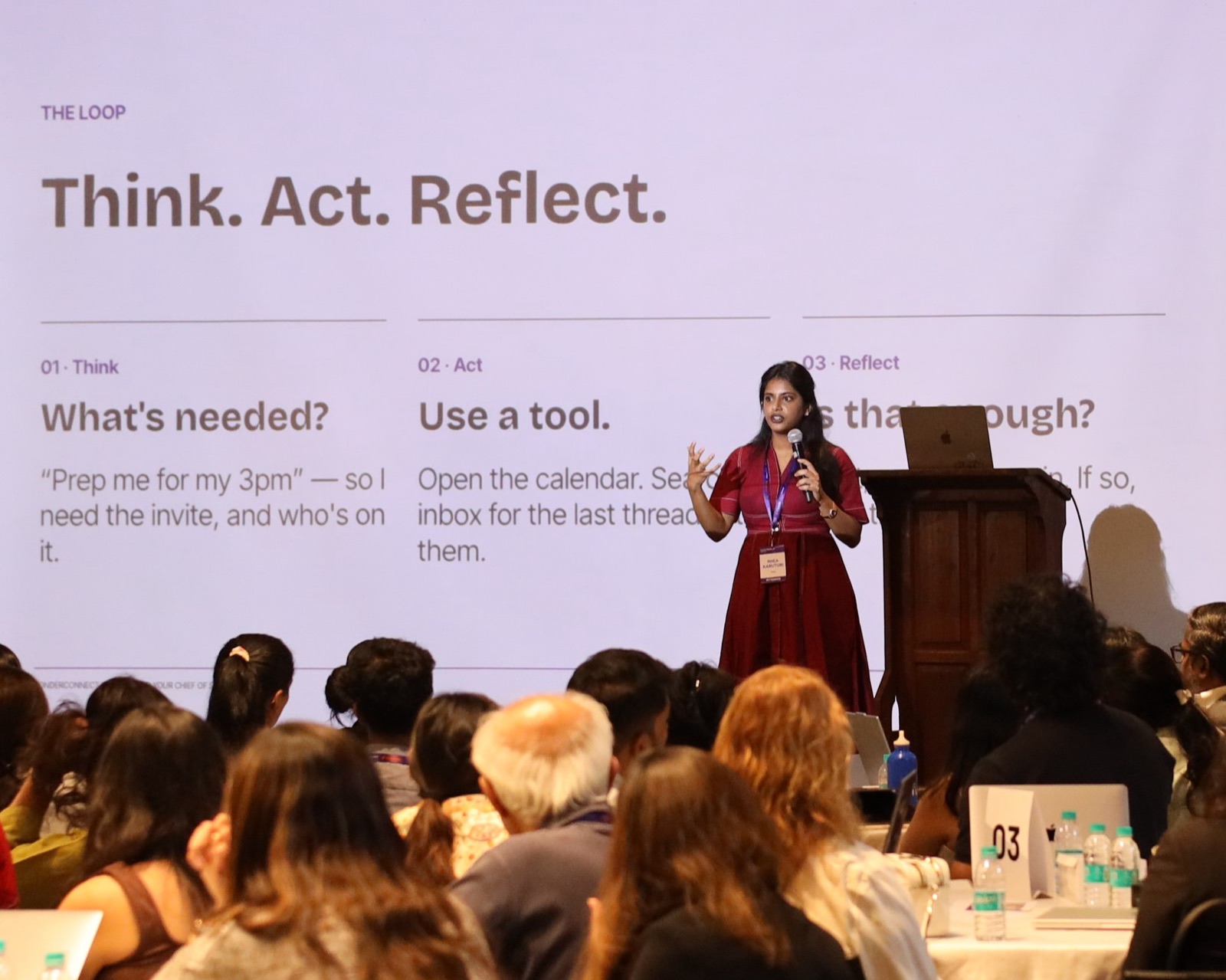
Think. Act. Reflect.
Ask an agent to prep you for your 3pm, and here’s what happens:
The invite, and who’s on it.
Open the calendar. Search the inbox for the last thread with them.
If not, go round again. If so, write the brief.
↺ The loop repeats until the answer is good enough.
The analogy we used all afternoonAn agent is a new hire you have to onboard.
| A new hire gets | An agent gets |
|---|---|
| A role | Instructions: who it is and what it’s for |
| A briefing | Context: your company, your people, your priorities |
| Logins | Tools: connectors to email, calendar and docs |
| House rules | Boundaries: do freely, ask first, never |
| Feedback | Memory: it gets better every time you correct it |
Most people in the room had onboarded a human before, so they knew more about building agents than they assumed.
Then I showed mine.
All three demos ran on real systems I use, not mock-ups.
It reads nine cities of orders, wastage and collections every morning, decides what matters today, and says why.
On WhatsApp. A forwarded ticket becomes a calendar entry. When I asked for a meeting, it warned me the slot clashed with the Ignite tech track before booking anything.
“Make me an NDA for Hoovu Fresh.” It checks the legal entity name, and a few seconds later a signed, dated PDF comes back.
The common jobs are where everyone starts. The uncommon job that’s particular to you is what makes yours worth having.
By common jobs I mean inbox checks on a schedule, a brief before every meeting, a morning brief and a weekly review. Nobody would put the NDA on a chief of staff’s job description, and that’s the point.
Six questions you’d answer for a human, too.
- 01Where do they meet you?
- 02What do they know on day one?
- 03When can they reach out, why, and how?
- 04What can they touch, and what can’t they?
- 05How do they speak, and what’s off limits?
- 06What should be true in a month because they exist?
The last one does the most work, because it asks for a success criterion rather than a job description.
Now go build it.
The setup guide is on heyrhai.com/chief-of-staff-workshop. Getting started takes four steps:
In Claude. Call it “Chief of Staff.”
Upload the setup guide from the workshop page.
Type: Start my chief of staff setup.
One question at a time. Say “skip” whenever you like.
When a connector didn’t work, people skipped it and it went on a to-do list. When someone got stuck, they raised a hand and we came to their table. By the end, people had instructions, context files, skills for their three most important jobs, and draft-only schedules wherever their account allowed.
So the build didn’t have to stop when the session ended: in Claude Code, and as an always-on agent.
From there, the path to an always-on agent is short:
An agent is not a human.
Each one is good at what the other can’t be.
- Awake at 3am
- Reading every email
- Never forgetting a follow-up
- Present in the room
- Trusted with what’s unsaid
- Held accountable
Therefore a computer must never make a management decision
From an IBM training slide, 1979. It still applies.
So don’t just digitise the job description. Every role exists for an outcome, and the tasks are how you get there. The outcome stays with the person. Most of the tasks can go to agents. The people at those tables were starting to sort their own work that way.
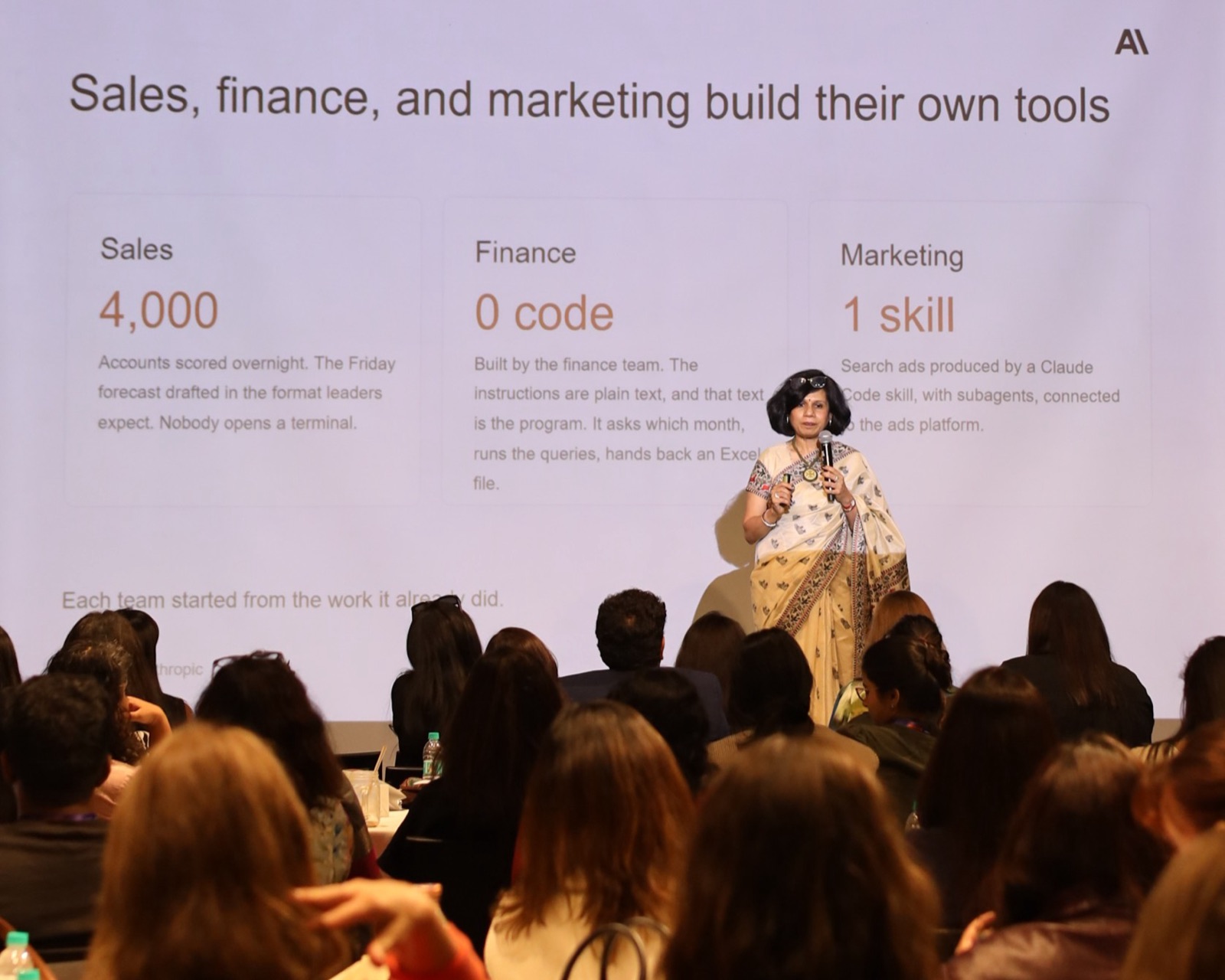
The day closed in the Main Hall with Irina’s State of AI talk. Her examples were close to what we’d done that afternoon: sales, finance and marketing teams building their own tools, often with no code, starting from work they already did.
Rhai’s work is built on Claude, so it meant a lot to share a stage with the Anthropic team, in a room of Bengaluru founders who had built their first agent that afternoon.
The conference ran on a dashboard I built.
I built SonderConnect’s event backend in the weeks before Ignite.AI. By the day itself, it was handling most of the operations.
- Razorpay checkout. A seat counts only once it’s paid
- Prices and discount codes checked on the server, never trusted from the browser
- GST invoices, and a link to add a GSTIN after booking
- A shareable “I’ll be there” badge for LinkedIn
- Opened from a pinned WhatsApp link
- Run of show for both tracks, and a sponsor pipeline
- Attendee pace against target, plus workshop checklists
- Event-day logistics with owners, and a decisions log where any change can be undone
- Scoped to the event. The team messages it and loops emails in
- A weekly rhythm of reminders that organisers can edit themselves
- Everyone gets their own list with three buttons:
- A QR page for every session: ask a question, upvote the best ones, then rate it and leave a voice note
- A shared photo wall and networking bingo
- An end-of-day voice review
- A “built” page for showing what you made in the workshop
A conference about building with AI, organised by a small committee working with an agent.
That was the workshop’s point, played out at the scale of a whole conference.
The future is here. Let’s get our hands dirty with it.
Thanks to Lathika Pai and the SonderConnect team for building the day. Thanks to Anthropic for partnering, for the credits and for Irina’s talk, and to AWS for sponsoring the day and running the tech track. And thank you to everyone at the Main Hall tables who built a chief of staff with me. I want to see how it’s doing in a month.