01 · The roomEvery head of department, in one room.
KMC Constructions has been building for more than fifty years. Today it's a ₹1,000+ crore company building government infrastructure projects, and it has just started a new railway build. That's a lot of people, sites and paperwork to keep in sync.
Most AI trainings I'm asked to run start with one team, usually the one that's most excited. This one started differently. Ananya Reddy decided to put every head of department in the same room for a full day: projects, quantity surveying, supply chain, plant and equipment, accounts, internal audit, company secretarial, HR, tenders, IT.
That turned out to be the most important design decision of the day, and it was hers.
When you teach one department, you teach a tool. When you teach every department at once, you can talk about the system: how information actually moves between people, where it gets stuck, and who has to vouch for it before anyone acts. Every head in that room is a node in that system. Each of them sends something up, receives something down, and checks something along the way.
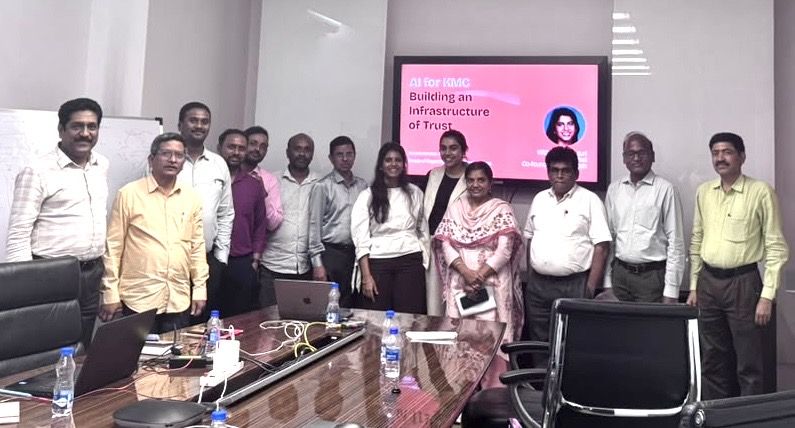
We grounded everything in that railway project, so nothing was abstract. My one request at the start was honesty: tell me how things actually work, where updates get stuck, what's broken. The more honest the room, the better the output.
02 · The old answerFor 2,000 years, people have carried the information.
Every company that works across distance faces the same question: how do you coordinate people who can't all see each other? A railway project makes it vivid. Kilometres of track, hundreds of people on site, one head office in another city.
The answer we inherited is the military's: a nested hierarchy, defined by span of control.
The first modern org chart was drawn for a railroad, and we were discussing it inside a company building one. The catch is that more layers mean information moves slowly in both directions, and people have to carry it. For two thousand years there was no alternative. Now there is.
03 · The new shapeFrom hierarchy to intelligence.
Jack Dorsey and Roelof Botha's 2026 essay on rebuilding Block makes the case that AI takes over the relaying, the part of the org that exists only to move information between layers. What sits between management and the field can be an agentic layer: it reads everything coming up from site, structures it, routes it to the person who owns it, and drafts the next action going back down.
Information goes up, plans come down, and fewer people have to spend their day being the wire in between.
04 · The real problemMoving data is easy. Moving trust is the hard part.
Here's where my own background came in. My undergraduate thesis at Stanford was on Aadhaar as trust infrastructure: how a billion people who've never met come to trust each other at scale. The answer was never only technology. It was a system for deciding who to trust, and how to check.
A company is the same problem at a smaller scale. The definition of trust I find most useful has two parts:
Intent. Do you care how this turns out, for me and for the company?
Skill. Do you know the work well enough to get it right?
Today, trust flows through people. You believe the progress report because you trust the person who sent it. That works until the project is enormous and the person is three layers away.
And when you look closely, a hierarchy is already a trust system. Every layer checks the one below it. The site engineer measures, the project manager confirms, QS checks quantities, internal audit checks the bill, accounts pays, the MD signs off. That's what the layers are for. It's also exactly why they're slow.
AI changes one half of the equation. It brings competence at scale: a model can read every bill on the project, every site update, every indent. But it has no stake in the company. It brings no goodwill. So it never gets the final word.
The agentic layer handles competence. Goodwill, and the final say, stay with people.
05 · The rulesTrust, but verify.
If AI is going to sit inside the trust system, it has to play by rules the whole room can see. We wrote four down:
- 01Every answer shows its source. The row, the page, the message it came from.
- 02Every action has an owner. A named person approves before anything goes out.
- 03Every change leaves a trail. Who changed what, and when.
- 04Every number reconciles. Totals add up, or the system flags it.
And then the boundaries, in the same language you'd use to onboard a new hire:
Helps a person decide faster. Changes nothing on its own.
A named owner says yes before it happens.
IDs, payroll, bank details and passwords stay out.
06 · The buildEvery head left with their own page.
Talk only goes so far. In the afternoon, each head of department sat with an AI interviewer that asked about their role, their day, and the one or two things they check every morning to know if things are on track. Out of that came a spec for their own page of a shared project dashboard: one briefing written fresh each morning, the headline numbers, a task board ranked by impact, and the detail underneath where the AI shows its work.
Each department adds a column to the same picture. Schedule and progress, measured quantities, indents and deliveries, machine hours, bills raised and received. The dashboard stops being a report and becomes the company's interface to itself: the place where the picture lives, and where trust gets checked.
The goal for the day was never mastery. It was an AI champion in every department: someone who has used it on real work, can see where it fits in their own function, and will help carry it forward.
Four lessons from the day
- Put every department in the room. AI is a systems change, and you can only see the system when all its nodes are present.
- Hierarchy was always a way to move information and trust. The question isn't whether to flatten it; it's what carries the information once people don't have to.
- The layer between management and the field can be agentic: reading, structuring, routing, drafting, so people can spend their time owning outcomes.
- AI supplies competence at scale. Goodwill stays human. Design so that a named person always has the final word.
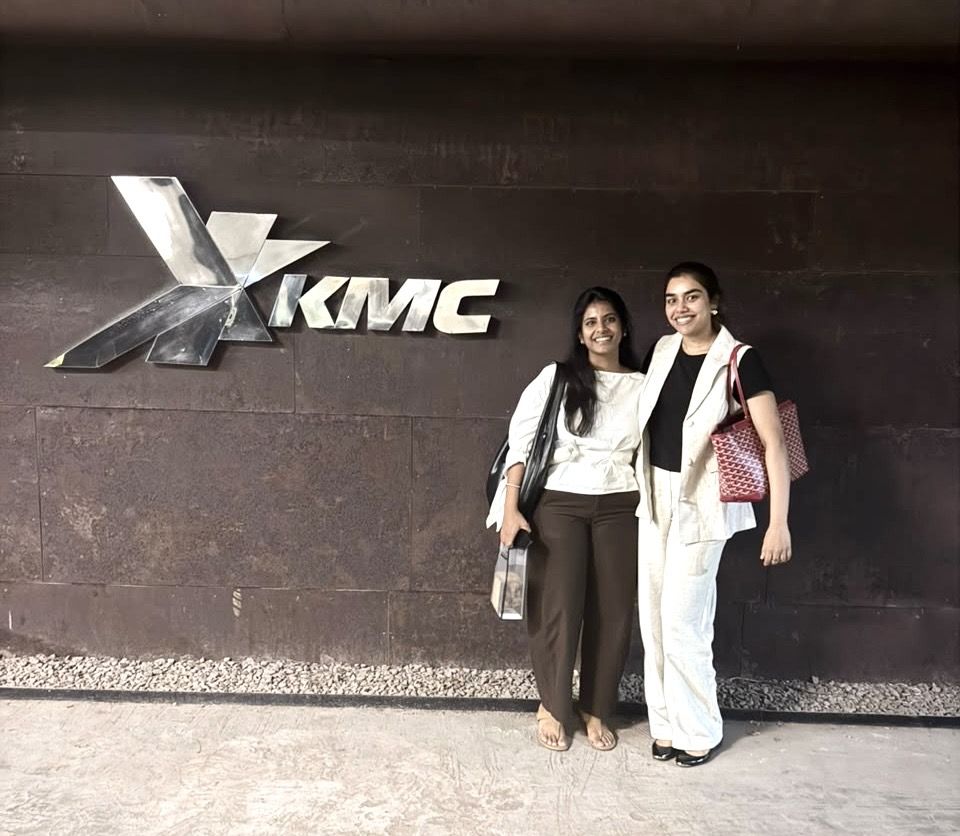
Every role is for an outcome. The tasks just get you there.
The outcome stays with the person. They own it. The tasks, most of them anyway, go to agents. Getting that split right, and making it trustworthy, is the work I want to keep doing.
As William Gibson put it, the future is already here; it's just not evenly distributed. For one day in November, it was distributed across every department at KMC. Now comes the part where they carry it forward.
Rhai runs hands-on AI days for leadership teams and builds the dashboards that come out of them. If you'd like one for your company, I'd love to hear from you.
Get in touch →